JHU ENGINEERING INNOVATION / GROUP PRESENTATION
SleepDock.
An individual idea,
refined as a team.
SleepDock grew out of my individual CircaDock project at JHU Engineering Innovation. In the later group assignment, Alessandro, Kelvin, and I discussed possible approaches, refined the design, and chose the version we would present together. I used Daniel as my English name in the presentation.
Presented by Alessandro, Daniel (Zixuan Chen), and Kelvin.
View the complete presentation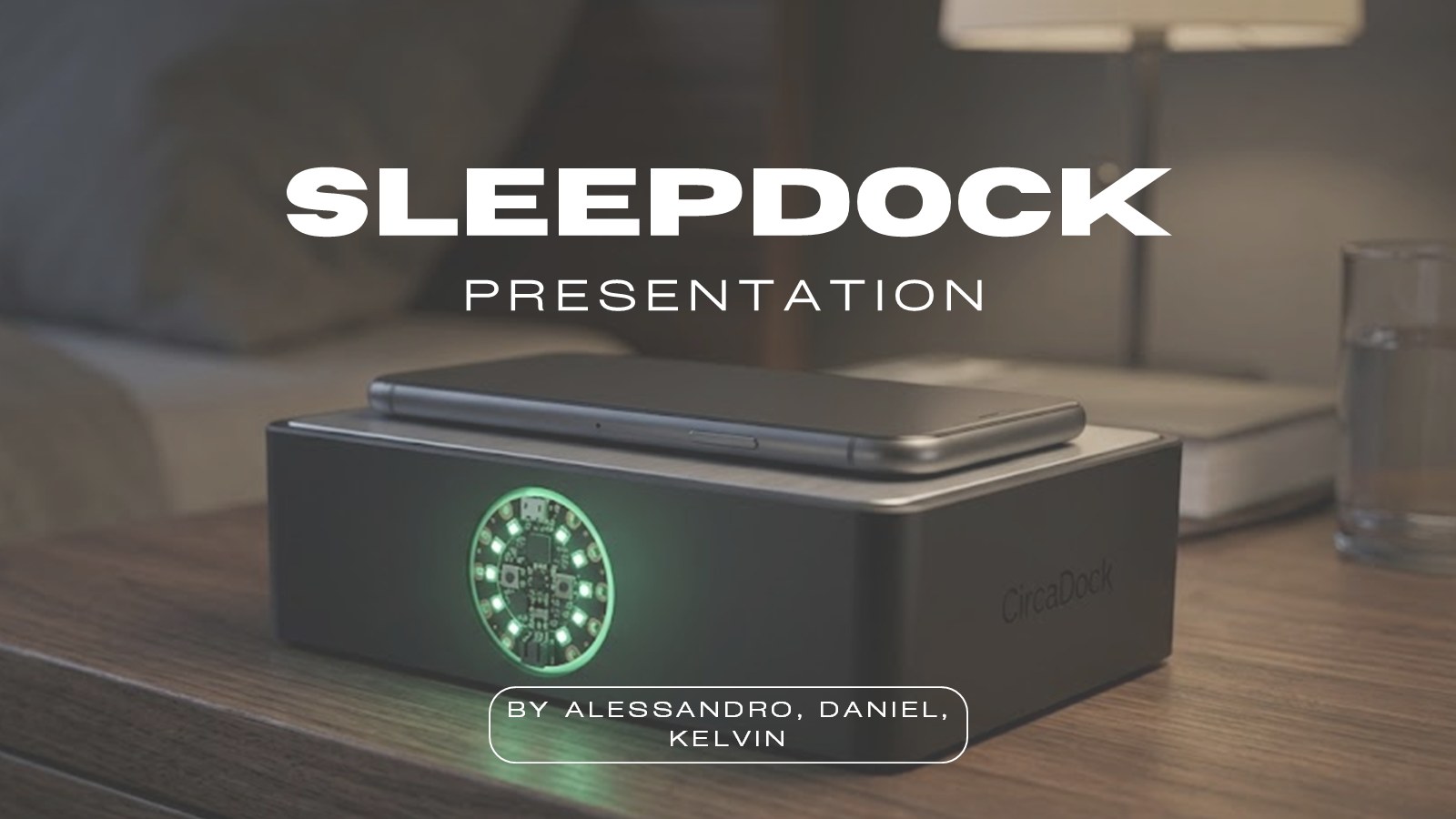
THE TEAM CONCEPT
From first design
to team refinement.
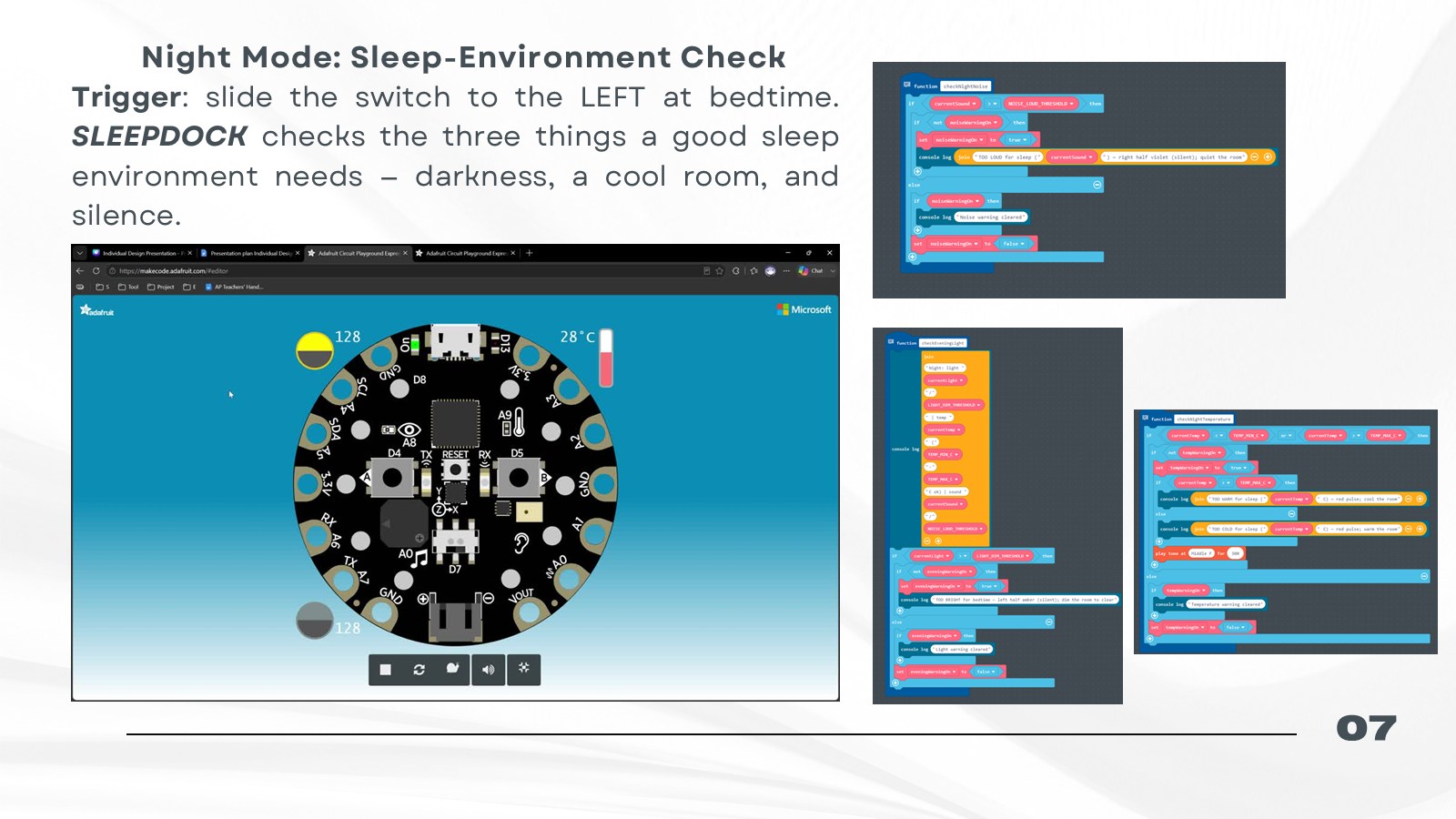
The individual project provided the starting point. Through group discussion, we considered how to improve and extend the design, selected the approach we considered strongest, and developed it into the SleepDock presentation. Our evolved concept combined a morning light check, a night-time environment check, a guided breathing-light sequence, and a phone-presence input.
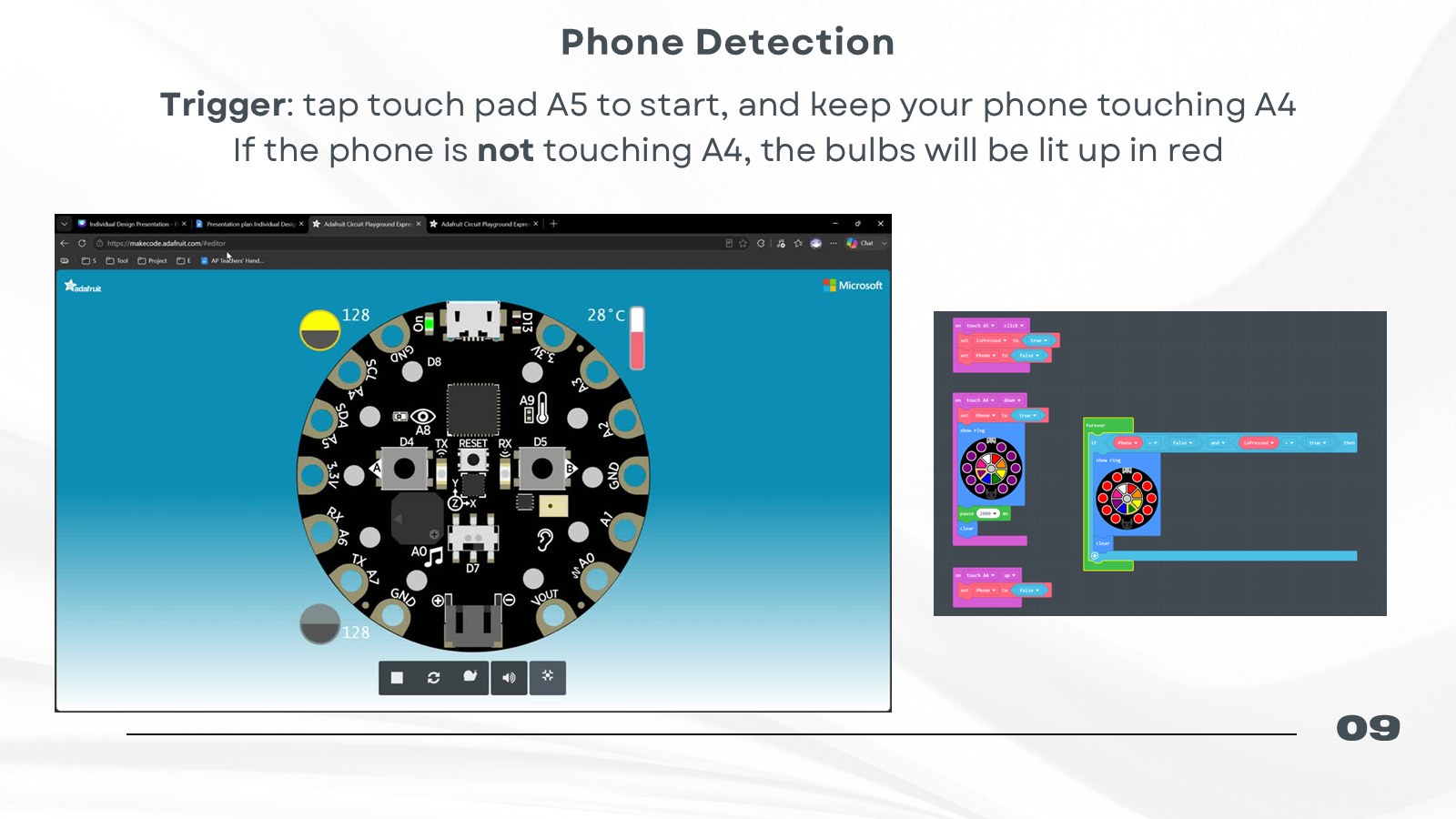
The evolved team design uses these interactions: A1 for the morning light check, A2 for breathing guidance, and A5 to start the phone-contact routine with A4 as the contact input.
Follow the earlier stage in my individual CircaDock design notebook, which records the six-state design and seven iterations that preceded this team development.
FROM THE ORIGINAL DECK
Inside the
presentation.
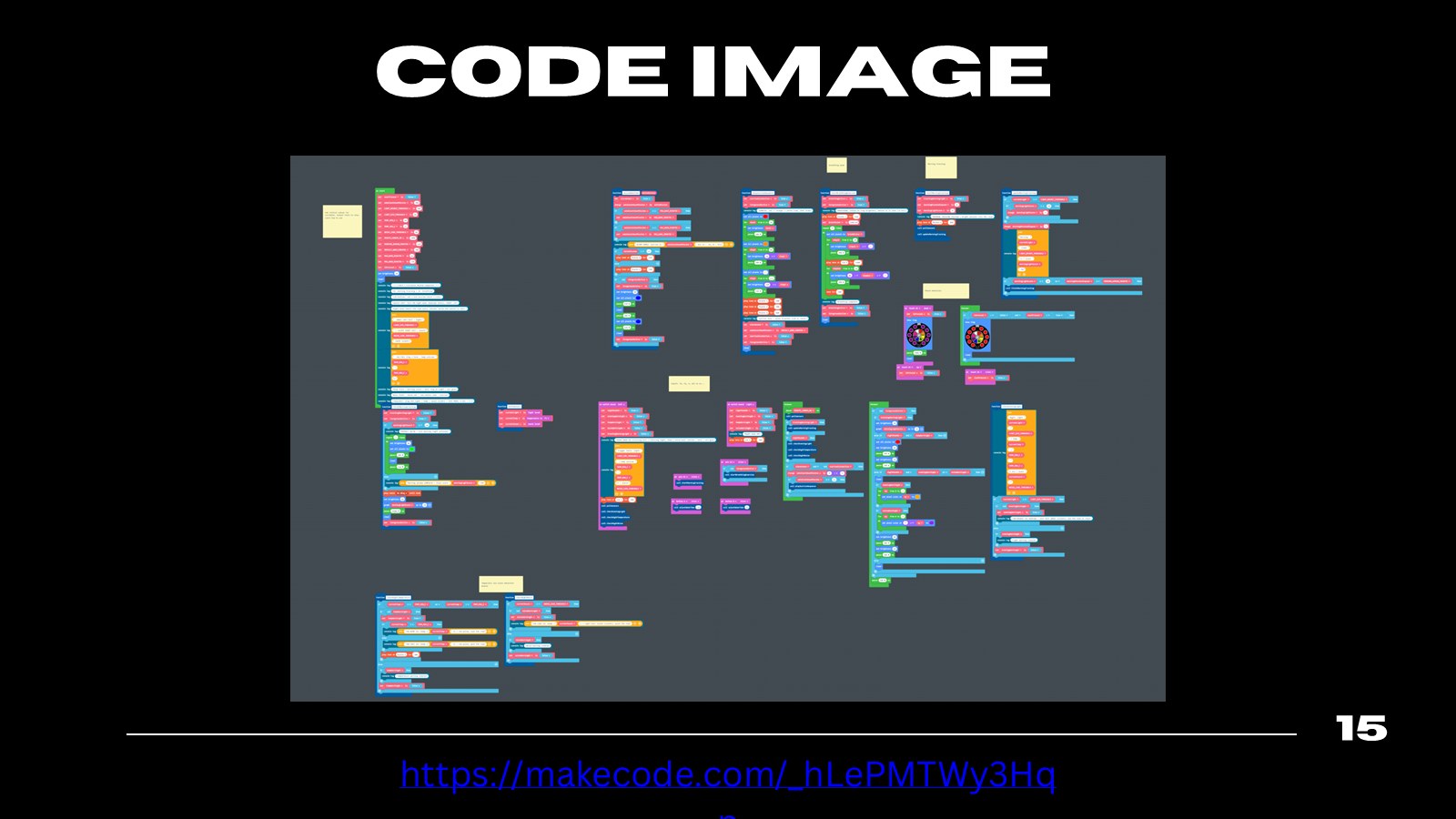
Selected original slides focus on the team, the interaction design, and the program. Open any image for a larger view.
THE COMPLETE PRESENTATION
Read the
full deck.
The 17-slide classroom presentation includes the problem framing, proposed features, product and cost concepts, code, and references. Its health-benefit forecasts and cost estimates are concept-stage presentation claims. They are not measured outcomes or validated product performance from this project.